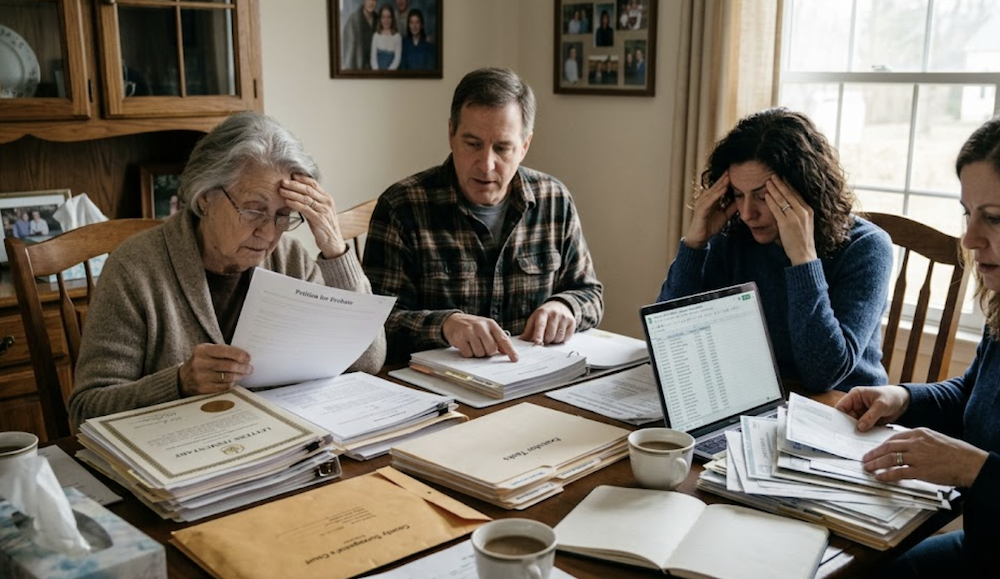
How Long Does Probate Take in New York? A Realistic Timeline for NYC Families
In This Article
The Short Answer: 9 to 18 Months Is Typical What Happens During Probate in New York Step-by-Step Probate Timeline What Slows Probate Down Contested Probate: When Family Members Disagree How to Help the Process Move FasterReviewed by Kent Gross, Esq. — 40+ years handling elder law, estate planning, and guardianship matters in New York.
The Short Answer: 9 to 18 Months Is Typical
For a straightforward, uncontested estate in New York City, most probate cases take between 9 and 18 months from the time the petition is filed to the time the estate is fully settled and assets are distributed. Some simpler estates can wrap up in as little as 7 months, while estates involving real property, tax filings, or family disagreements routinely take two years or more.
These timelines can vary by county. Manhattan Surrogate’s Court, Kings County (Brooklyn), and Queens County each have their own calendars and processing speeds. If your family member passed away in one borough but owned property in another, you may be dealing with more than one court.
What Happens During Probate in New York
Probate is the court-supervised process of validating a deceased person’s will and authorizing someone, called the executor, to gather assets, pay debts and taxes, and distribute what remains to the beneficiaries named in the will.
If there is no will, the process is called administration rather than probate, and the court appoints an administrator, typically the closest living relative, to handle the estate. The timeline for administration is similar to probate, though it adds the step of determining who inherits under New York’s intestacy laws.
In both cases, the Surrogate’s Court in the county where the deceased person lived oversees the process.
Step-by-Step Probate Timeline
Here is a general timeline showing what happens and how long each step typically takes in a New York City probate case.
Filing the petition and gathering documents usually takes 2 to 4 weeks. This includes locating the original will, death certificate, and information about the deceased person’s assets and heirs. The attorney files a probate petition with the Surrogate’s Court.
Issuing citations and notifying interested parties takes another 2 to 6 weeks. The court must notify all persons who have a legal interest in the estate, including beneficiaries named in the will and anyone who would inherit if there were no will. These individuals receive a citation and have the opportunity to appear in court.
The court hearing and issuance of Letters Testamentary can take 4 to 12 weeks after citations are returned. If no one objects, the Surrogate reviews the petition and, if everything is in order, issues Letters Testamentary. These letters give the executor legal authority to act on behalf of the estate.
Marshaling assets and paying debts is often the longest phase, typically 3 to 9 months. The executor must identify and secure all estate assets, notify creditors, pay outstanding debts, and file any required tax returns, including a New York estate tax return if the estate exceeds the current exemption threshold.
Final accounting and distribution takes 1 to 3 months. The executor prepares a final accounting showing all receipts and disbursements. Once approved, either by the beneficiaries informally or by the court formally, the remaining assets are distributed.
Not sure where to start? Talk to an attorney who handles these situations every day.
Schedule a Free 20-Minute CallOr call: (929) 777-6030
What Slows Probate Down
Several factors routinely extend the probate timeline well beyond the typical range.
Missing or unclear wills cause delays from the start. If the original will cannot be found, the court requires additional proof before it will admit a copy. Handwritten wills, wills with improper witness signatures, or wills that were amended multiple times can all trigger objections.
Real property complicates things. Selling real estate from an estate in New York requires additional steps, including appraisals, clearing title, and sometimes court approval. If the property has liens, code violations, or title defects, those must be resolved first.
Tax filings add time. Estates that exceed the New York estate tax exemption of $7,350,000 or the federal exemption of $15,000,000 for 2026 must file estate tax returns. These returns are complex and take time to prepare correctly. The IRS and New York State tax authorities may take months to process them.
Locating beneficiaries and creditors is sometimes more difficult than expected, particularly in large families, families with estranged members, or situations where the deceased person had debts with multiple creditors.
Surrogate’s Court backlog also plays a role. New York City courts handle a high volume of cases, and administrative delays are common, particularly in Manhattan and Brooklyn.
Contested Probate: When Family Members Disagree
If a beneficiary or heir objects to the will, the probate process can extend by a year or more. Common grounds for a will contest in New York include claims that the person who made the will lacked mental capacity, that someone exerted undue influence over them, that the will was not properly executed under New York law, or that a later will exists.
Will contests involve discovery, depositions, and sometimes a trial. During this period, the estate is essentially frozen. The executor cannot distribute assets until the dispute is resolved.
Even without a formal contest, disagreements among family members about how assets should be handled can slow things down. If beneficiaries challenge the executor’s decisions or demand a formal court accounting, each step adds weeks or months.
How to Help the Process Move Faster
While no one can fully control the probate timeline, there are steps that can help move things along.
Having an organized estate plan makes a significant difference. When the will is clearly written, the original is safely stored, and the executor knows where to find key documents such as account statements, deeds, and insurance policies, the initial stages of probate go much more smoothly.
Choosing an executor who is organized and available matters. The executor has a fiduciary duty to act promptly and responsibly. Delays often happen when the executor is overwhelmed, unresponsive, or unfamiliar with the process.
Working with an experienced probate attorney helps avoid procedural errors that cause the court to reject filings or request additional information. An attorney who regularly practices in the relevant Surrogate’s Court knows the local rules and can anticipate issues before they cause delays.
Getting waivers from beneficiaries when possible can eliminate the need for formal citations and court appearances. If all interested parties sign waivers and consents, the court can often issue Letters Testamentary more quickly.
Have questions about your specific situation? Get clear answers from an experienced attorney.
Book Your Free ConsultationOr call: (929) 777-6030
Can You Avoid Probate Entirely?
Yes, with proper planning. Many New York families use estate planning tools specifically to keep assets out of probate. Revocable living trusts allow assets to pass to beneficiaries without court involvement. Joint ownership with right of survivorship transfers property automatically at death. Payable-on-death and transfer-on-death designations on bank accounts and, as of recently in New York, real property can bypass probate. Beneficiary designations on retirement accounts and life insurance also pass outside of probate.
These strategies do not eliminate the need for a will entirely. A will serves as a safety net for any assets not covered by other arrangements and is the only way to name a guardian for minor children. But a well-structured estate plan can dramatically reduce or even eliminate what passes through probate, saving time, money, and stress for your family.
Frequently Asked Questions
How long does probate take in NYC specifically?
In New York City, uncontested probate cases typically take 9 to 18 months. Manhattan and Brooklyn tend to have longer timelines due to higher case volumes. Contested cases can take two to three years or more.
What is the difference between probate and administration in New York?
Probate applies when the deceased person left a valid will. Administration applies when there is no will. The processes are similar, but administration requires the court to determine who inherits under New York’s intestacy laws and who should serve as administrator.
Do all estates need to go through probate in New York?
No. If all assets are held in trust, jointly owned, or have designated beneficiaries, there may be nothing that needs to pass through probate. Small estates valued at $50,000 or less in personal property (not including real property) may qualify for a simplified small estate affidavit under SCPA § 1301.
How much does probate cost in New York?
Costs vary but typically include filing fees (which depend on estate value), attorney fees, executor commissions, and costs for any required publications or citations. Surrogate’s Court filing fees range from $45 for estates under $10,000 to $1,250 for estates over $500,000.
Can the executor be paid for their work?
Yes. Under New York law (SCPA § 2307), executors are entitled to commissions based on the value of the estate. The commission structure is 5% on the first $100,000, 4% on the next $200,000, 3% on the next $700,000, 2.5% on the next $4,000,000, and 2% on amounts over $5,000,000.
Planning Ahead Can Save Your Family Time and Stress
Probate in New York is not something most families think about until they are in the middle of it. But understanding the timeline and what causes delays can help you make better decisions now, whether that means updating your will, setting up a trust, or simply making sure your executor knows where your important documents are.
LGK Lawyers helps New York City families navigate estate planning and probate. If you have questions about your estate plan or need help with the probate process, schedule a consultation with our team.
*The information in this blog post is provided for general informational purposes only and does not constitute legal advice. Reading this content or contacting LGK Lawyers through this website does not create an attorney-client relationship. This post discusses New York law, which may differ from the law in other jurisdictions. For advice specific to your situation, please schedule a consultation.*
LGK Lawyers | 165 Broadway, Floor 23, New York, NY 10006 | (347) 919-6050 | 3 Franklin Square, Saratoga Springs, NY 12866 | (518) 558-4495 | lgklawyers.com | Attorney Advertising. Prior results do not guarantee a similar outcome.
Ready to Protect Your Family?
Schedule a free 20-minute consultation with an experienced New York estate planning attorney. No obligation, no pressure — just answers.
Book Your Free ConsultationOr call: (929) 777-6030
Related Articles